Release date: October 23, 2025
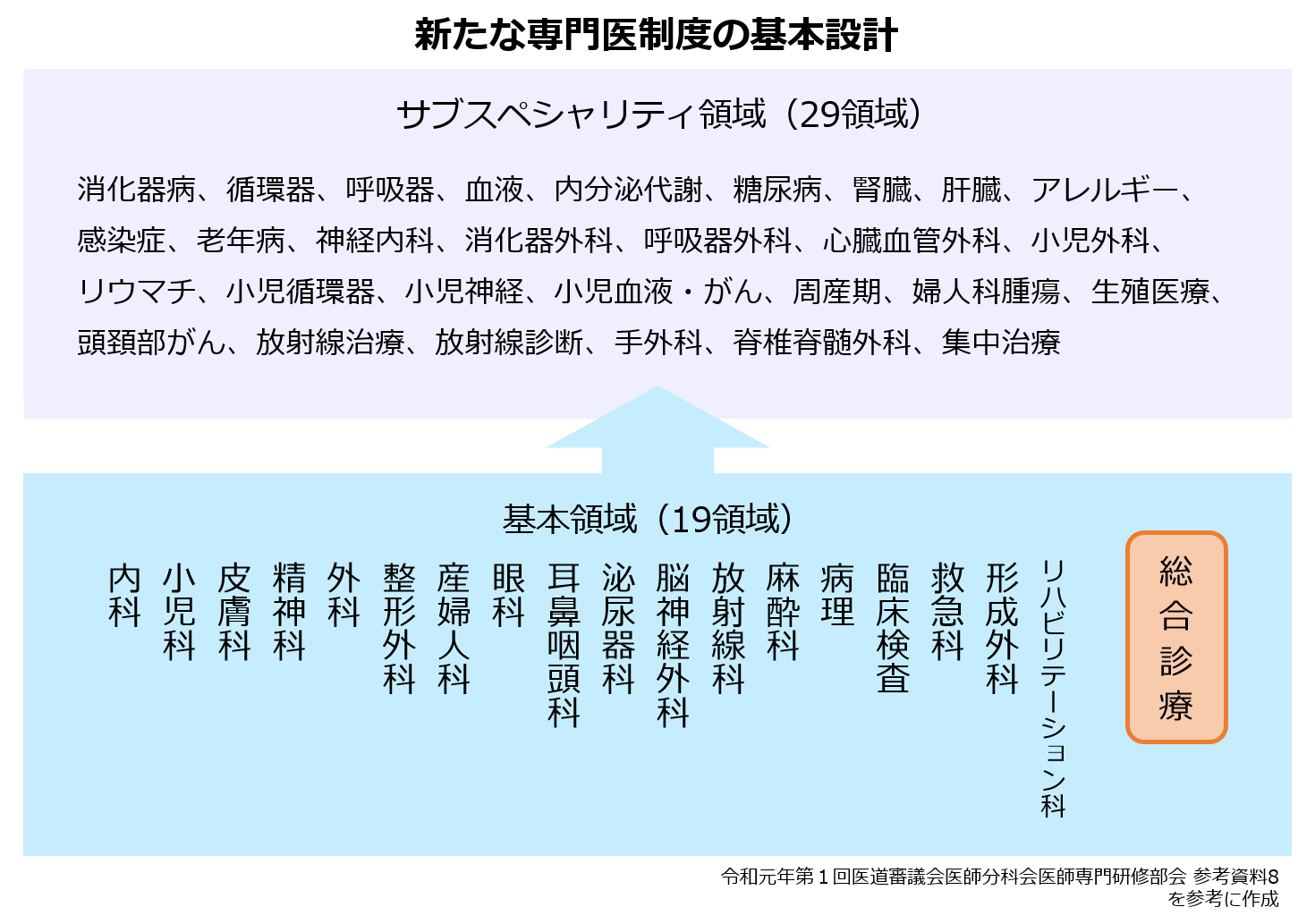
The importance of general practitioners in Japanese healthcare has been rapidly increasing in recent years. In 2018, the Japanese Board of Specialists officially recognized "general practice" as one of 19 basic medical fields, bringing renewed attention to the role of generalists amid the increasing specialization of medicine. The establishment of the general practitioner specialist system can be considered a major turning point in Japan's healthcare system. In this first installment, we will summarize the role of general practitioners and their necessity in modern medicine.
Today's society is facing complex challenges, including a rapid aging population, the specialization of medical care, and uneven distribution of medical care across regions. Many elderly people suffer from multiple chronic illnesses, and while specialists are concentrated in urban areas, physician shortages are becoming more severe in rural areas, creating a situation in which traditional specialized medical care based on organs and diseases alone is no longer sufficient. Furthermore, the medical paradigm itself is shifting from disease- and doctor-centered to "patient-centered medicine" that emphasizes patients' values and lifestyles, requiring a more comprehensive and humanistic perspective. Against this backdrop, the presence of general practitioners who can handle a wide range of medical fields and treat patients holistically is becoming essential.
A general practitioner is a doctor who treats patients holistically, going beyond the traditional medical framework of organ-specific, disease-specific, and age-specific care. They do not simply treat illnesses, but provide medical care that takes into account the patient's lifestyle, family environment, values, and social situation. This comprehensive perspective is an effective counterpoint to modern medicine, which tends to be segmented and fragmented. General practitioners view patients not as a collection of single organs or illnesses, but as integrated beings with a complex intertwining of physical, psychological, and social factors, and it is this perspective that defines the essence of a general practitioner. General practitioners' activities span a wide range of fields, including community medicine, home care, emergency response, and chronic disease management, playing important roles in a wide range of areas.
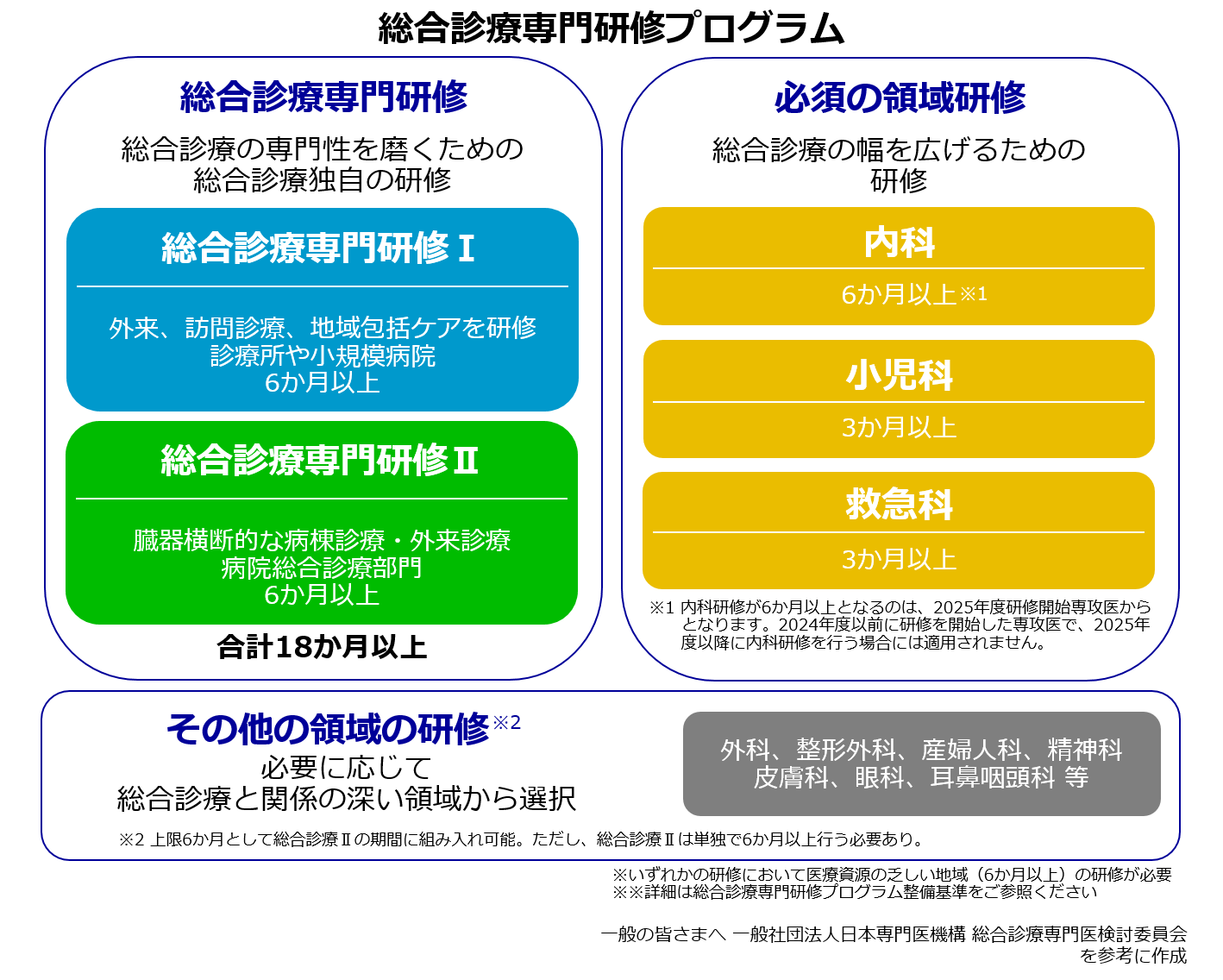
In 2018, the Japanese Board of Medical Specialties officially recognized "general practice" as one of its 19 basic fields. To become certified as a general practitioner, one must undergo a rigorous training process. After graduating from medical school, one must obtain a medical license and complete two years of initial clinical training. Then, one must enroll in a "general practice specialist training program" recognized by the Japanese Board of Medical Specialties and undergo at least three years of specialized training.
The training is divided into "General Practice Specialist Training I" (clinics and small to medium-sized hospitals) and "General Practice Specialist Training II" (general practice departments of hospitals), each of which requires at least six months of training, for a total of at least 18 months.
During clinical training, students will experience a wide variety of cases in five settings: outpatient care, ward care, emergency care, home care, and community care. Students are also required to meet set standards for responding to conditions that require initial response, mastering the necessary techniques and surgeries, and participating in academic activities.
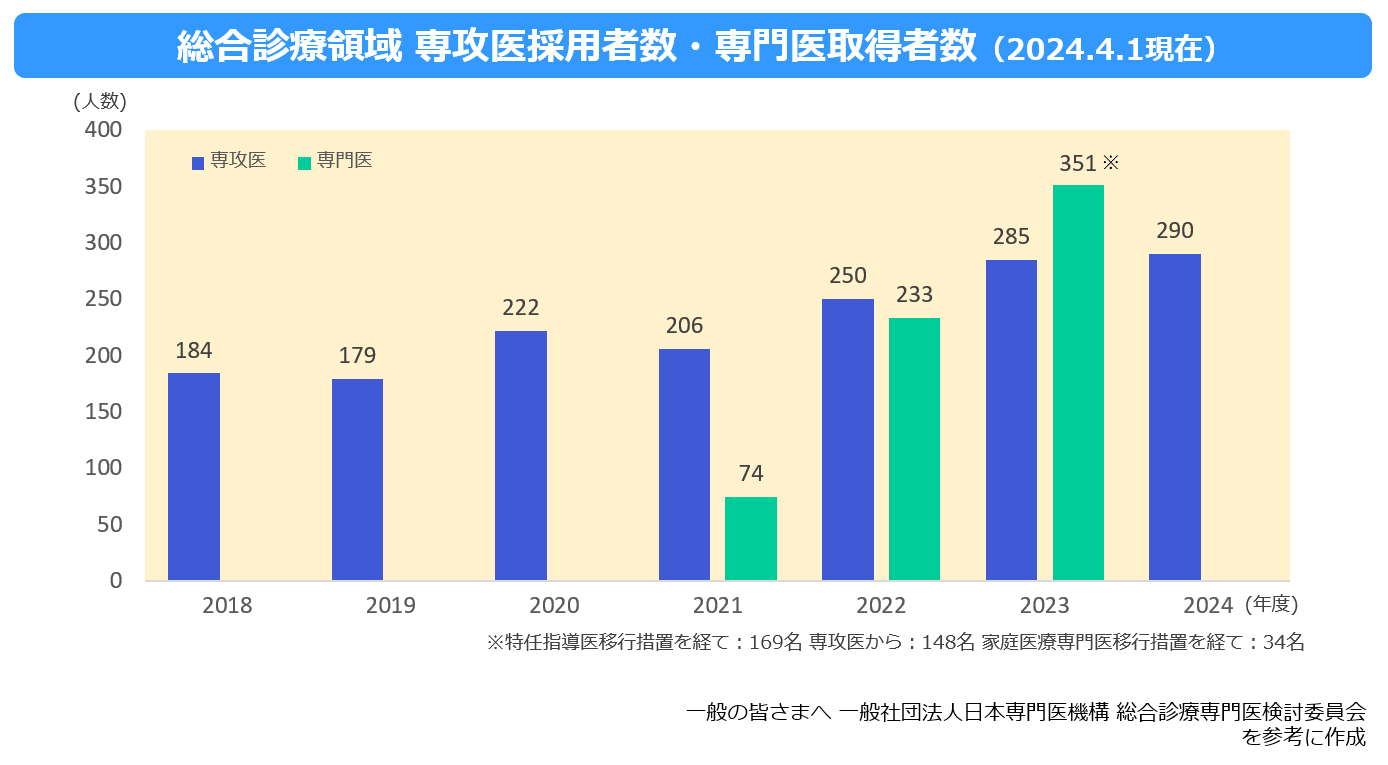
The number of young doctors who have completed their clinical training and are applying for and accepted into the training program (specialty program) under the specialist system, which aims to make them "general practice specialists," is increasing year by year, reaching 290 in 2024. As of April 2024, 658 people have passed the exam after three years of training. While the number is still small at present, the number of general practice specialists is sure to increase in the future.
Furthermore, based on the general practice specialist qualification, specialist qualifications in subspecialty areas such as "new family medicine specialist" and "hospital general practice specialist" have also been established, opening the way for those to pursue even higher levels of expertise.
Primary care practiced by general practitioners has several essential characteristics.
The first is "continuity." This means building a long-term relationship with patients and providing ongoing care that accompanies them at every stage of their lives. This relationship allows us to understand changes in a patient's health over the long term, enabling more accurate medical decisions to be made.
Second, there is "comprehensiveness." Primary care is not limited to a specific disease, but rather addresses a wide range of health problems that patients have. As a result, patients do not need to move between multiple specialist departments, and can receive medical care that is efficient and less burdensome.
"Collaboration" is also an important element. General practitioners work in collaboration with various professionals, including nurses, pharmacists, physical therapists, and social workers, to formulate and implement the optimal care plan for each patient. General practitioners function as the core of team medical care, contributing to the provision of higher quality medical care.
Furthermore, "accessibility" is also essential. Primary care serves as a familiar and easy-to-consult medical consultation point for local residents, and plays an important role as a gateway to medical care.
Many elderly people suffer from multiple chronic illnesses simultaneously, making it difficult to adequately address them through organ-specific specialized medical care. A comprehensive approach by a general practitioner is key to comprehensively managing complex health issues and improving patients' quality of life. As the shortage of doctors in rural and depopulated areas becomes chronic, general practitioners who can individually address a wide range of medical needs play an extremely important role in maintaining and improving the local medical care system. Appropriate initial responses by general practitioners and allocating patients to specialists reduce unnecessary tests and consultations, significantly contributing to reducing medical costs and making effective use of medical resources.
The holistic approach of general practitioners is at the core of a new medical paradigm that places emphasis on the patient's values and living conditions, and will achieve true improvement in patient satisfaction. The establishment of the general practitioner system does not negate the benefits of specialization, but rather signifies a renewed social recognition of the value of general practitioners as generalists.
In the future, expectations are expected to grow for general practitioners as the core personnel of the community-based comprehensive care system. The role that general practitioners play in addressing multifaceted issues such as balancing the quality and efficiency of medical care, improving patient satisfaction, and ensuring the sustainability of community medical care is extremely important.
As Japan's healthcare system evolves into one that is more patient-centered and sustainable, general practitioners are expected to transcend their specialty and function as the core of the entire healthcare system. To meet this expectation, nurturing general practitioners and raising their social recognition will be important challenges for the future.



 URL copied
MEDIUS Group is developing a business centered on the sale of medical equipment. We (Medical + us) involved in medical care also want to play the role of an information source (Media) that delivers useful information for the medical field and people's healthy tomorrow.


The challenge of home medical care that "supports daily life" - A "triple win" for patients, medical institutions, and the government will ensure the future of an aging society...
Supporting the career advancement of female doctors Introduce career counseling to increase the number of female doctors aiming to become specialists...

The new value of medical care is to improve the happiness of patients and medical professionals by providing medical services that emphasize "emotional value"
Genomic medicine: the present and future expectations
Supporting regional medical care in disaster-prone Japan: Japan Medical Association Disaster Medical Team (JMAT)